Getting a Fake Review Removed: What Actually Works
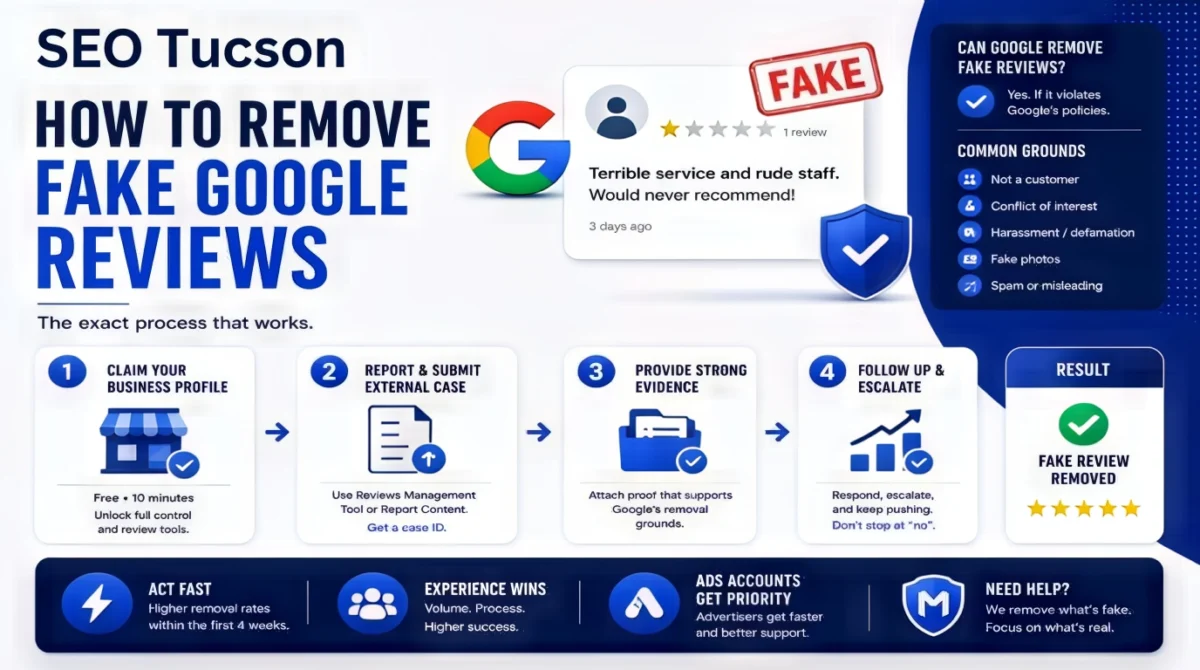
Google takes down reviews that break a policy. It does not take down reviews that are unfair, wrong, or bad for business. Almost every call I get about this is the second kind.
I'm David Cragg. I've been in search since 1990, and I do the review and profile work for my Tucson clients myself.
The short version
- Most negative reviews cannot be removed. If a real customer had a real bad experience and wrote about it without breaking a policy, it stays. There is no form for that.
- Google removes on policy grounds only. "This never happened" is not a policy. "The reviewer has a conflict of interest" is.
- You report and appeal in one place, the Reviews Management Tool. You get one appeal per review, so write it properly the first time.
- The Business Redressal Complaint Form is for listing fraud and coordinated attacks, not for one review you disagree with.
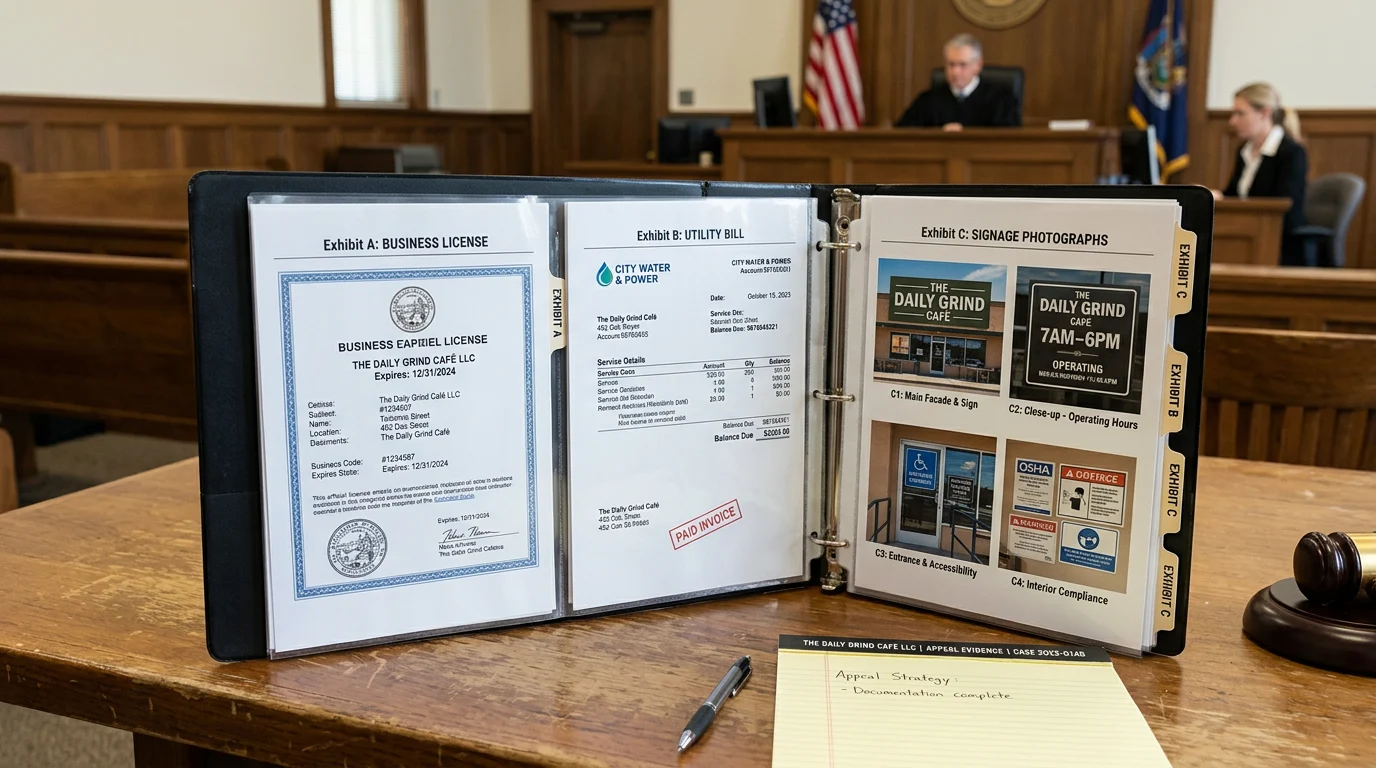
- When the review is a false statement of fact and it's costing you real money, that's a lawyer's problem, not mine. In Arizona you have one year to act.
Somebody calls me about once a month with the same sentence: a review went up, it isn't true, and they want it gone by Friday. I'll tell you what I tell them, which is that we should find out in the first ten minutes whether this review has any chance of coming down, because the answer changes everything we do next.
Google does remove reviews, and at a scale that's hard to picture. Its own 2025 report says the company's systems and analysts blocked or removed more than 292 million policy-violating reviews in one year, pulled over 13 million fake Business Profiles, and put posting restrictions on more than 782,000 accounts. So the machinery exists and it's busy. It just isn't aimed at the thing most owners want it aimed at.
What Google actually removes, and what owners assume it removes
Every removal runs through one document: the prohibited and restricted content policy for Maps contributions. A review comes down when it breaks a rule in there. Not when it's harsh, not when the star rating is unfair, and not when you can prove the person is wrong about what happened.
That distinction is the whole ballgame, so here's where the common assumptions land.
| The review | What owners assume | Where it actually stands |
|---|---|---|
| One star, no text | Meaningless, so Google will drop it | Stays. A rating with no words breaks no policy on its own. |
| "They quoted me $400 and charged $900" | It's false, so it's removable | Stays. Google doesn't adjudicate who's right about an invoice. |
| Not in your customer records at all | Proof it's fake, so it's gone | Reportable as not based on a genuine experience — but your records aren't proof to Google, and plenty of these survive. |
| Posted by a competitor or their staff | Obvious to Google | Reportable as a conflict of interest. One of the better odds you get, if you can show the connection. |
| Posted by a former employee about being fired | Nothing to be done | Reportable as a conflict of interest and often off topic. Worth filing. |
| Names your tech and calls him a thief | Defamation, so Google removes it | Reportable on harassment or personal information grounds. Defamation is a court's word, not a Google category. |
| About the wrong location or the wrong company | Somebody has to fix that | Reportable as off topic, and these come down more often than anything else on this list. |
| Five identical reviews in one hour from new accounts | Report each one and hope | Escalate. A pattern is treated differently from a review, and it goes on a different form. |
Read the right-hand column again. Four of those eight are worth filing, and only two of them are what I'd call good odds. That's the real shape of this problem, and it's the reason the first thing I do is triage rather than file.
How to flag a review
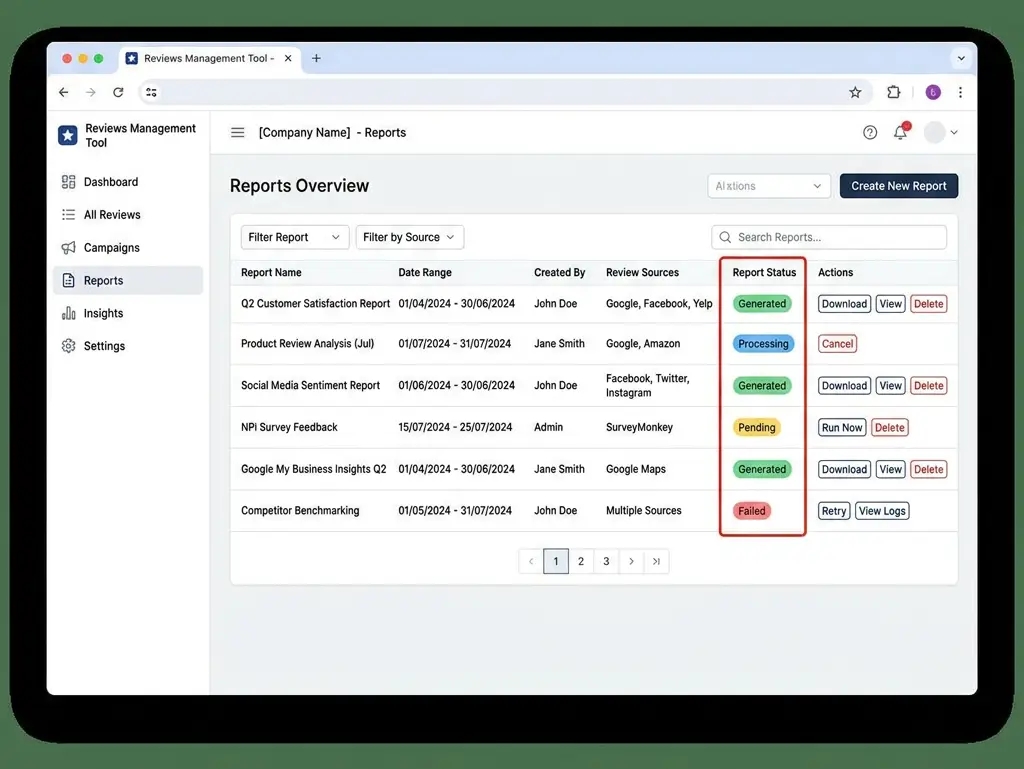
Reporting and appealing both live in Google's Reviews Management Tool, which replaced the old free-text support form. Google's help page on reporting inappropriate reviews walks the same path. Takes about five minutes.
- Open the Reviews Management Tool and confirm the email address tied to your Business Profile. If the profile sits under a different login, switch accounts first, or you'll report nothing.
- Pick the business, then choose to report a new review for removal.
- Find the review and select Report.
- Choose the reason. This is the part people rush. You are naming a policy, so pick the one that fits the facts rather than the one that fits your feelings.
- Submit, then screenshot the review, the reviewer's profile, and the date before you close the tab. Once it's removed you can't get any of that back, and if you end up in front of a lawyer it's the first thing they'll ask for.
- Come back to the same tool for the status: decision pending, no policy violation found, or gone.
Two things not to do. Don't report every review you don't like — Google sees the pattern across your account, and an owner who flags forty reviews has trained the system to ignore him. And don't have your staff and your cousins all report the same review from their own accounts. Volume of reports isn't how this gets decided.
The one appeal you get
If Google comes back with no policy violation, you can appeal, once, per review. It's in the same tool, at the bottom of the list, under appeal eligible reviews. It's buried far enough down that most owners never find it, which is a shame, because the appeal is where the case actually gets made. You can put several reviews through at once and Google emails the result.
Write it like a short brief, not a complaint. Name the policy in the words Google uses. Give the facts that connect this review to that policy, with dates. Then stop.
"Misrepresentation, conflict of interest. The reviewer is a former employee, terminated on 4 March 2026. The review was posted 6 March 2026 and describes our internal scheduling process, not a service he purchased. We have no record of him as a customer."
That's the whole appeal. Forty words. It beats four paragraphs about how unfair this is, every time.What loses an appeal: no policy named, no dates, an argument that the review is factually wrong rather than policy-violating, and length. Somebody reading their fortieth case of the day is looking for the policy hook. Hand it to them.
When the redressal form is the right escalation
The Business Redressal Complaint Form gets recommended constantly for fake reviews, and it's mostly the wrong tool. Google's own wording, on the Maps reporting page, scopes it to misleading business names, phone numbers and URLs that suggest fraudulent activity, and lets you submit ten or more profiles or a spreadsheet at once. The form's own text says that if your complaint isn't about fraudulent activity on the name, phone number or URL, it won't be reviewed.
So it's built for listing fraud. Use it when:
- Somebody stood up a fake listing using your name, or your address, or your phone number, and is fielding your calls. You can't delete a listing you don't own, and this is the route.
- A competitor is running lead-gen listings with keyword-stuffed names at addresses that aren't real offices. I see this constantly in Tucson locksmith, garage door and water damage searches, where half the Map Pack is somebody's apartment.
- You've been hit by a coordinated wave of fake reviews and can document it as a pattern rather than as eight separate grievances. The form takes attachments and multiple URLs, which is what makes it worth using here even though reviews aren't its stated purpose. Practitioners have gotten review networks killed this way, and Google has been fine with it being used that way, but know that you're using a side door.
Do not use it for one review from one angry person. It'll go nowhere, you won't get a status update, and you'll have spent an afternoon. Google says plainly that submitting the form doesn't guarantee action.
Extortion is the one case where you should move fast and not quietly. If somebody is demanding payment to make one-star reviews disappear, that's a known racket, Google now tries to block those posts before they go live, and paying is the worst available option. Keep the messages, report the reviews, and tell Google support what's happening.
Timelines and success rates, honestly
Google says review evaluation typically takes several days, and won't publish a success rate. Nobody outside Google has real numbers either, so treat anything you read as a practitioner's tally rather than a statistic. Mine, from the work I've done, looks like this:
- First report: two to five days for a clear-cut case, longer when a human has to look. Sometimes an answer lands in a day.
- Appeal: a week to two weeks. One shot, as above.
- Redressal form: no timeline and no status page. If something happens, you find out by noticing.
- Legal removal request: weeks. It's a different department with a higher bar.
And the part nobody puts on a services page: an off-topic review or a wrong-business review usually comes down. A conflict-of-interest review with documentation often comes down. A one-star from a real customer who's furious about a real job comes down almost never, no matter who you hire. If a vendor guarantees removal, they're either lying or planning to mass-flag your profile in a way you won't enjoy the consequences of.
What to do when Google says no
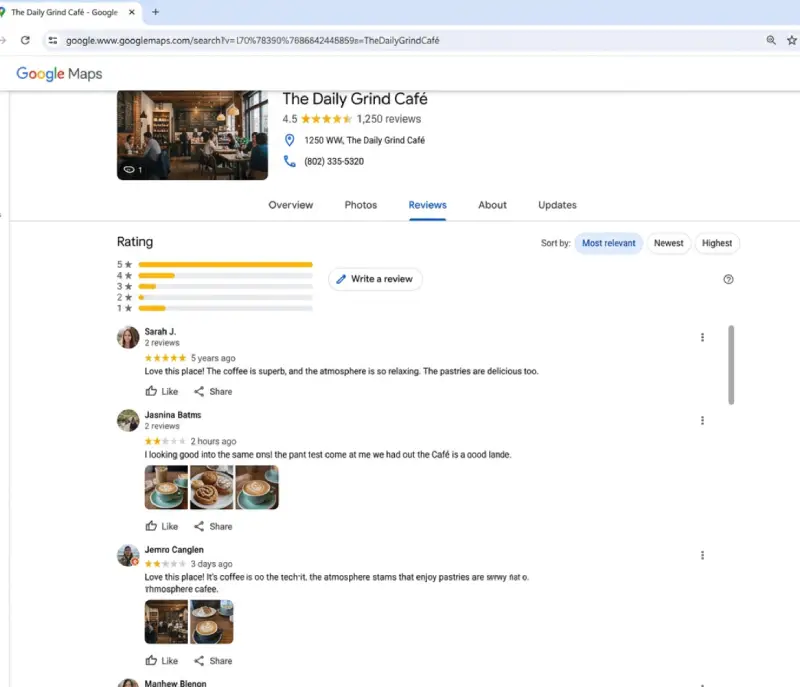
This is where most of these end up, so it deserves more than a shrug.
Answer it for the next reader
The reply isn't for the reviewer. It's for the person reading your profile next week with your competitor's tab already open. Three sentences: what happened, what you did, how to reach a person. No arguing, no legal threats, no customer details, no discount codes.
Bury it in real volume
One bad review inside nine is a crisis. Inside 140 it's texture, and buyers trust a 4.6 with volume over a 5.0 with three.
The volume fix is a standing process that asks every customer at the same point in the job, with no survey in front of it and nothing offered in exchange. Both of those are policy violations now, and the FTC's Rule on the Use of Consumer Reviews and Testimonials has covered this ground since October 2024, with civil penalties attached. Don't rush it either. A sudden spike of new reviews right after a removal fight is one of the patterns that triggers automated removals.
And if the review is the third result for your business name, part of the answer sits off your profile entirely. Pages you control should outrank pages you don't, which is ordinary content and technical SEO work rather than reputation work.
The point where this stops being an SEO problem
I'm not a lawyer and nothing here is legal advice. But I can tell you where the handoff is, because owners burn months on Google forms when they should have made a phone call, and other owners threaten lawsuits over things no court will touch.
It's a legal question when the review contains a false statement of fact, not an opinion, and the damage is real and measurable. "They're overpriced and rude" is opinion and is going nowhere. "This clinic reused needles" is a statement of fact, and if it's false, that's a different conversation. Two things to know before you start it:
- Google isn't the defendant. Section 230 of the Communications Decency Act shields the platform from liability for what a user posted. Suing Google over a review is not a strategy. The author is the party.
- In Arizona you have one year. Libel and slander claims must be brought within one year under A.R.S. § 12-541. If you spend fourteen months appealing to Google first, the option is gone. That alone is a reason to talk to counsel early even if you never file.
What a lawyer can do that I can't: send a demand letter that gets the author to delete it themselves, which is the cleanest outcome available; subpoena to unmask an anonymous account; and get a court order. A court order is the one key that opens Google's front door. Google's own defamation guidance and its legal removal request forms take defamation reports and court orders directly, and its first piece of advice is the same as mine: go to whoever posted it before you go to the platform.
Weigh the cost honestly. A defamation case costs more than most small businesses want to spend and puts the whole dispute in a public filing where it can be found and written about. For one bad review it's almost never worth it. For a coordinated attack that's measurably cutting your call volume, it can be.
What this looks like in Tucson
Two things about this market that change the math.
The first is that Tucson Map Packs are small enough that one review swings real money. A dentist in the Catalina Foothills or an HVAC company in Marana is usually competing with six or eight serious local outfits, not sixty. When a competitor's cousin leaves three one-stars on a Tuesday, the rating moves visibly, and it moves in a ranking factor Google names itself: prominence. In Phoenix that same attack disappears into the noise. Here it doesn't.
The second is seasonal. Snowbird months bring a spike in first-time customers across Green Valley, Sahuarita and Oro Valley, and with them a spike in reviews from people who used you once and had one bad interaction with one tech. Those are real customers and those reviews are staying up. The businesses that come through that period in good shape are the ones already collecting reviews steadily in July, not the ones scrambling in February.
Which is the honest summary of this whole article. The removal work is worth doing, it's free, and it takes me twenty minutes per review. It is also the smallest lever in the box. The reputation work that actually moves your rating is the boring part that runs every month.
What clients say about working with me
Nine of my ten Google reviews were left on my former Temecula SEO profile, from the Southern California practice I ran from 2007 until I moved to Tucson in 2022. Two of the people below have reviewed SEO Tucson as well. I'd rather tell you that than let you assume all of this happened last year on Oracle Road.
"I have been a client of David at SEO Tucson for over 10 years. His wealth of knowledge of SEO marketing has been a tremendous help for my company. He's always up to date with all the new rules and changes and always willing to try new things to help push and keep my company on the top of Google listing"
Bao Nguyen 5.0 on Google · SEO Tucson and Temecula SEO"David has been a huge help to my business. He's knowledgeable, responsive, and consistently delivers great work. Since working with him, we've seen strong improvements and he continues to go above and beyond to help our business grow. Highly recommend David and SEO Tucson to anyone looking for someone who truly cares about getting results."
Weston Molitor 5.0 on Google · SEO Tucson and Temecula SEO"David at TemeculaSEO is a unique professional. He has been in the industry almost longer than the web has been around. He cares about my success and spends as much time as it takes to make my business succeed. I wish that I could afford to pay him more."
Dr. Ryan Marshall, D.C. 5.0 on Google · Temecula SEO"David is great to work with. He takes his job seriously, is a wealth of knowledge not only in SEO, but also business in general. If you are looking to for someone to handle SEO for you - you can stop looking now."
Russ Colburn 5.0 on Google · Temecula SEOSend me the review and I'll tell you if it's removable
No charge and no pitch. Paste the link or send a screenshot, and I'll tell you which policy it plausibly violates, whether I'd file it, and what I'd write in the appeal. If it's not coming down I'll say so in the first minute instead of selling you a program.
One consultant. $1,000 a month, month to month, no contract. Profile audits are free. Serving Tucson, Oro Valley, Marana, Catalina Foothills, Sahuarita, Green Valley and Vail.
Prefer to write? Use the contact page.
Who wrote this
I'm David Cragg. I've worked in search since 1990, which is three years before the first web browser went mainstream and eight years before Google launched. I built and sold two internet marketing companies, Lotus411.com and MSD2D.com, serving thousands of Microsoft and IBM third-party partners along with Microsoft, IBM, HP, Intel and Dell directly. I started Temecula SEO in 2007 and moved the practice to Tucson in 2022. Economics degree from UCLA, MBA from the University of Washington.
Review reporting and appeals aren't a task I hand off. I write the reports, I write the appeals, I write the replies, and I tell the client when a review isn't coming down. That's also why the timelines in this article are given as my experience rather than as published figures — they're what I've watched happen, and I've said so rather than dressing them up as data. More about my background, with filings and press coverage you can check, or what the engagement includes and costs.
Written by David Cragg. Last reviewed 17 September 2026. Drafted with AI assistance and edited, checked and approved by me. Here is exactly how I use it and what it is not allowed to do.
Questions about getting reviews removed
How long does Google take to decide on a review I reported?
Google says review evaluation typically takes several days, and it will not commit to a deadline. In practice a clear-cut case, such as a review that is obviously about a different business, often comes back inside two to five days. Cases that need a human to read the context run a week or more. Your status stays visible in the Reviews Management Tool the whole time, so check there rather than calling support for an update.
How many times can I report the same review?
Once, plus one appeal. Reporting the same review over and over from the same account does not restart the clock, and reporting it from your staff's personal accounts does not add weight. What decides the outcome is whether the report names a policy the review actually breaks. Because you only get one appeal per review, treat the appeal as your real submission and write it carefully.
Can I get a review removed because the person was never a customer?
You can report it on the grounds that it is not based on a genuine experience, and that is the correct policy to name. Understand that your records are not proof to Google. Your CRM showing no matching name only tells Google what your CRM says, and people book under a spouse's name, a maiden name, or a company name all the time. The report is worth filing and it sometimes works, but a missing record on its own is a weak case.
What if the review came from a former employee?
That is one of the better cases you get. A review from a former employee is a conflict of interest under Google's policy, and if it describes internal matters rather than a service they bought as a customer it is usually off topic as well. Report it, name the conflict of interest, and in the appeal give the termination date and the posting date. Those two dates sitting next to each other do more work than any amount of explanation.
Somebody is demanding money to take down one-star reviews. What do I do?
Do not pay, and do not negotiate. This is an established extortion scheme and paying marks you as a business that pays. Keep every message with dates and account names, report each review through the Reviews Management Tool, and tell Google support what is happening so the pattern is on record. Google announced in April 2026 that it upgraded its systems to catch review extortion attempts before the posts go live, so reporting it is not pointless. If real money is being demanded, it is also worth a call to a lawyer.
Will deleting my Google Business Profile get rid of the reviews?
No, and it is one of the worst things you can do. The reviews belong to the place, not to your account. Removing yourself as the manager leaves the listing and its reviews live, and you lose the ability to reply, to report, or to control your own hours and phone number. Businesses that try this usually end up with an unclaimed listing carrying the same bad reviews plus stale information, and then spend weeks getting verified again.
Can a lawyer get a Google review removed faster than I can?
Not through the ordinary reporting channels — a lawyer filing a policy report goes in the same queue you do. Where counsel actually helps is on the paths you cannot use. A demand letter to the author often gets the review deleted at the source, which is faster and cleaner than any platform route. A subpoena can unmask an anonymous account. A court order finding the statement defamatory is the one thing that reliably moves Google. Those are legal tools, not SEO tools.
What happens to my star rating when a review is removed?
The review disappears from Maps and Search and the average recalculates without it, usually within a day or two. Your review count drops by one. If the removal came out of an enforcement action against a network of fake reviews rather than your individual report, several may vanish at once, and your rating can move noticeably. Do not try to backfill the gap quickly with a burst of new requests, because a sudden volume spike is itself a pattern that triggers automated removals.
Is it worth paying a company that guarantees review removal?
No. Nobody can guarantee removal because nobody outside Google decides it, and the guarantee tells you what the method is going to be: mass-flagging your profile, disputing reviews in bad faith, or filing the same complaint from dozens of accounts. Google notices all of that, and the account doing the flagging is yours. If a vendor promises to delete a genuine negative review, they are describing something that does not exist.
Does a one-star rating with no written review count as something Google will remove?
Generally no. A star rating with no text does not break a content policy by itself, so there is nothing to report it under. The exceptions are when it is part of a detectable pattern, such as a cluster of ratings-only one-stars arriving together from new accounts, or when the account itself is fake. In that situation you are reporting the pattern rather than the rating, and that is an escalation rather than a flag.
I run a small business in Oro Valley with eleven reviews. Is one bad review worth fighting?
Report it if it plausibly breaks a policy, because reporting is free and takes five minutes. Then spend the rest of your effort on volume, because at eleven reviews the arithmetic is against you and one more one-star hurts more than the last one did. A business with 11 reviews and a business with 140 can take the same bad review and only one of them feels it. In a market the size of Oro Valley, where you are competing with a handful of local outfits rather than hundreds, review count is often the difference in the Map Pack.
Sources and further reading
- Google Business Profile Help — Report inappropriate reviews on your Business Profile
- Google Business Profile Help — Reviews Management Tool (report, check status, appeal)
- Google — Prohibited and restricted content policy for Maps contributions
- Google Maps Help — Report a business on Google Maps, including the Business Redressal Complaint Form
- Google Legal Help — Defamation overview and Report content for legal reasons
- Google — New ways we're protecting businesses on Maps (2025 Trust & Safety figures, April 2026)
- Federal Trade Commission — Rule on the Use of Consumer Reviews and Testimonials
- Arizona State Legislature — A.R.S. § 12-541, one-year limitation for libel and slander
Where this fits with the rest of the work
Tucson reputation management
The full picture: reviews, listings, and page one of Google for your own business name. Removal is the smallest part of it.
Google Business Profile management
Where reporting, replying and monitoring actually happen. Included in the monthly fee, not sold as an add-on.
SEO audit
Start here if calls dropped and you don't know why. Covers the profile and the review picture along with the site. No charge.
Tucson SEO services
The main engagement this work sits inside. Local rankings, content, technical fixes and monthly reporting.
More in the reputation management articles, on review requests, replies and listing cleanup.
Tucson SEO, formerly Temecula SEO
Phone: (520) 207-6000
Consultant: David Cragg, in search since 1990
Serving Tucson, Oro Valley, Marana, Catalina Foothills, Sahuarita, Green Valley, Vail and Southern Arizona
Nothing on this page is legal advice. Review removal outcomes are decided by Google, and the timelines above are my own experience rather than a published figure. Page last reviewed 17 September 2026 by David Cragg.